
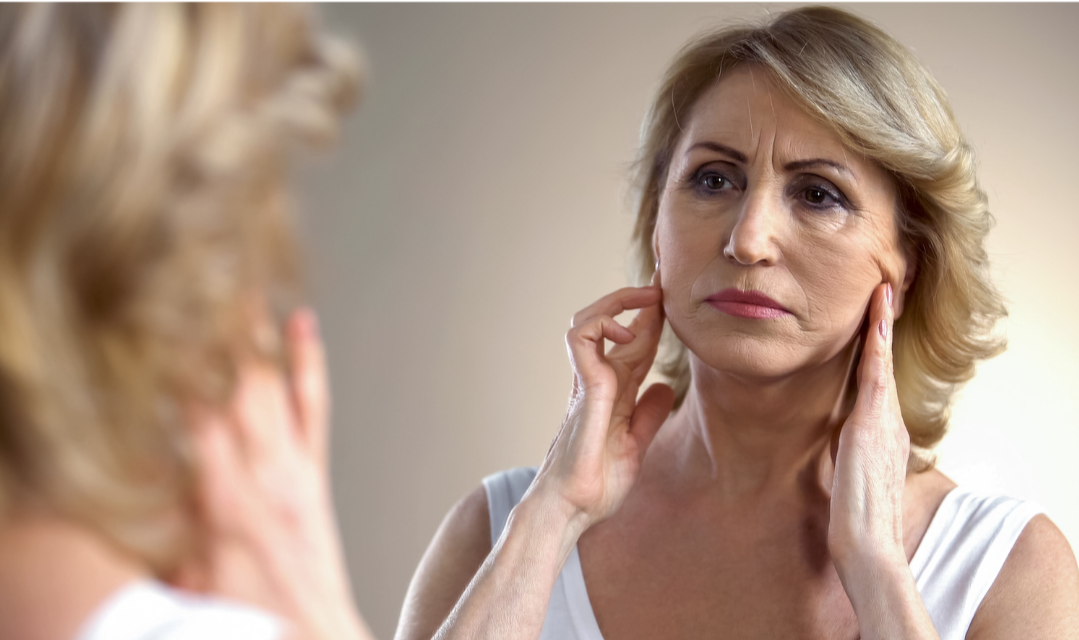
If you've looked in the mirror lately and thought, "Who is this, and what has she done with my skin?", I want you to know two things. First, you're not imagining it. Second, you are definitely not alone.
I see it in my treatment room all the time. A woman in her late thirties, forties or fifties sits down and says something like: "My skin has always been fine, and now it's dry, but also breakouty, and everything I put on it stings." She's tried new products. She's tried her old products. She's feeling a bit betrayed by her own face. Here's what's often going on.
Perimenopause is the transition leading up to menopause, and it can start earlier than most of us expect. For some women it begins in their mid-thirties. Oestrogen and progesterone don't decline in a neat, predictable line. They fluctuate, sometimes wildly, and your skin feels every swing.
Oestrogen plays a big role in keeping skin hydrated, plump and resilient. It supports collagen, the natural oils that keep your skin comfortable, and the strength of your skin barrier. When oestrogen becomes unpredictable, you might notice:
Dryness or tightness that moisturiser doesn't seem to fix
Skin that's more sensitive or reactive than it used to be
Breakouts along the jaw and chin, even if you never had them as a teenager
A loss of firmness or "bounce"
A duller, more tired-looking complexion
Slower healing and more visible redness
None of this means you're doing something wrong. It means your body is changing, and your skin needs different support than it did five years ago.
What's actually happening in your skin?
When oestrogen becomes unpredictable, a few things shift at once:
Hydration and oil: lower oestrogen can mean less natural oil and a weaker barrier, so your skin loses water more easily. This is why moisturiser can feel like it sits on top of your skin without really helping.
Collagen and firmness: collagen production slows, so skin can feel thinner and less bouncy.
Breakouts: as the hormone balance shifts, androgens (hormones like testosterone) can have more influence on your oil glands. That's one reason breakouts often show up around the jaw and chin.
Redness and sensitivity: a thinner, more reactive barrier, plus flushing, can leave skin blotchy, and rosacea sometimes appears or flares.
Healing: breakouts, scratches and irritation can take longer to settle.
Why more skincare products can make perimenopausal skin worse
When our skin starts misbehaving, most of us go looking for a fix. A stronger active. An extra serum. A new routine we saw online. But when your barrier is already compromised, adding more can leave your skin angrier and more sensitised than ever before.
In perimenopause, I'm often taking things back to basics:
Protect the barrier first. Gentle cleansing, nourishing hydration and sun protection do more heavy lifting than you'd think.
Be patient with actives. Ingredients like vitamin A, acids and peels can be wonderful, but the timing and the dose matter. Slower and steadier usually wins.
Look beyond that jar of face cream. Sleep, stress, blood sugar, gut health and nutrition all show up on your skin. This is where my naturopathic training and my facial work meet.
What should a perimenopause skincare routine look like?
Simple, gentle and consistent usually works best.
Morning: a gentle, non-stripping pH balanced cleanser (or just water), a hydrating serum or moisturiser with ingredients like ceramides or hyaluronic acid, and SPF 50+ every day. In Australia, UV damage is one of the biggest drivers of skin ageing, so sunscreen matters more than any serum.
Evening: cleanse gently, then nourish. If you're using vitamin A, start one or two nights a week and build up slowly, buffering with moisturiser if your skin is sensitive.
What to ease off: harsh scrubs, over-exfoliating and fragranced products, too many actives, especially while your skin feels reactive.
If your skin is stinging, simplify first and add things back one at a time.
Skin is only a part of the whole picture
I often refer to this as an "inside out approach" because your skin doesn't exist in isolation. If you're running on four hours of broken sleep, juggling work, kids, parents and everything else, your nervous system is working overtime, and your skin will often reflect that.
That's why I love combining treatments like facials, face sculpting and buccal massage, reiki, breathwork and sound healing with a bigger look at what's happening in your body. Treatments that calm the nervous system, support circulation and lymphatic flow, and help you actually relax can be a really lovely part of looking after yourself through this stage.
Does what you eat and how you live affect your skin?
It does, though it isn't a magic fix. Nourishing your body supports your skin. That means enough protein, healthy fats like those in oily fish, nuts and olive oil, plenty of colourful vegetables, fibre for your gut, and good hydration. Many women also find alcohol and poor sleep make their skin (and symptoms) worse during this stage. This is where a naturopathic approach and your skin care come together, and why I look at the whole picture.
What about hormone therapy and medical support?
Some women use menopausal hormone therapy, and some notice benefits for their skin, but it's a personal decision that's best made with your GP or a menopause-informed doctor. It isn't the right choice for everyone, and skin care and naturopathic support can work alongside medical care. You don't have to choose one path.
When should you get your skin checked?
Book in with your GP or a skin check clinic if you notice a new or changing mole or spot, a sore that won't heal, or sudden skin changes that don't seem to fit. Regular skin checks are a good habit at any age, and especially in Australia.
A little reassurance
Your skin isn't failing you. It's responding to a major life transition, and it deserves support rather than criticism.
If you'd like some guidance on where to start, I'd love to help. My Skin Blueprint consultation gives you a personalised plan and home care routine, so you're not guessing in the skincare aisle at 11pm.
Be kind to your skin. More importantly, be kind to you x
Frequently asked questions
-
Description text goes herePerimenopause can begin in the mid to late thirties for some women, though it more commonly starts in the forties. Skin changes can show up alongside cycle changes, or before you notice any other symptoms.
-
Yes, hormonal fluctuations can trigger breakouts, often around the jaw and chin, even in women who rarely had acne before. A gentle routine and a look at stress, sleep and gut health can help, and persistent or painful acne is worth reviewing with a health professional.
-
Start with gentle pH balanced cleansing, a nourishing moisturiser and daily sunscreen, and introduce actives like vitamin A slowly. The right routine depends on your skin, so a personalised plan is more useful than recommendations from a friend, or TikTok influencer.
-
Facials can support hydration, circulation and relaxation, and nervous system-led treatments suit skin that feels sensitive or reactive. They work best alongside home care and lifestyle support.
